- Posted on
- admin
Introduction
Marketing in 2026 is no longer about working harder—it’s about working smarter. With customers interacting across multiple platforms, expecting instant responses, and demanding personalized experiences, manual marketing efforts simply don’t scale. This is where marketing automation tools become essential.
In 2026, businesses that leverage automation are not just saving time; they are improving lead quality, increasing conversions, and delivering consistent brand experiences. Whether you are a startup, SME, or enterprise brand, marketing automation is no longer optional—it is a growth necessity.
In this blog, Mixmedia Labs breaks down the most important marketing automation tools every business needs in 2026, how they work, and why adopting them early gives you a competitive edge.
What Is Marketing Automation?
Marketing automation refers to the use of software and AI-powered tools to automate repetitive marketing tasks such as:
- Lead capturing and nurturing
- Email campaigns
- Social media scheduling
- Customer segmentation
- Performance tracking
- Personalized content delivery
The goal is simple: deliver the right message to the right audience at the right time—automatically.
Why Marketing Automation Is Critical in 2026
The digital landscape in 2026 is driven by:
- AI-powered search engines and platforms
- Cookieless tracking and privacy-first marketing
- Shorter customer attention spans
- Higher competition across industries
Marketing automation helps businesses:
- Reduce manual workload
- Improve customer experience
- Increase ROI on marketing spend
- Scale faster without increasing team size
Businesses that fail to automate risk falling behind competitors who move faster, personalize better, and optimize continuously.
1. CRM & Lead Management Automation Tools
A Customer Relationship Management (CRM) system is the foundation of marketing automation in 2026.
Why CRM Automation Matters
Why CRM Automation Matters
CRM tools automatically track:
- Lead sources
- Customer interactions
- Follow-ups and reminders
- Sales pipeline stages
Modern CRMs use AI to score leads, predict conversions, and recommend actions.
Key Features to Look For in 2026
- AI-based lead scoring
- Automated follow-up workflows
- WhatsApp and email integration
- Real-time analytics dashboards
Examples: HubSpot CRM, Zoho CRM, Salesforce, Freshsales
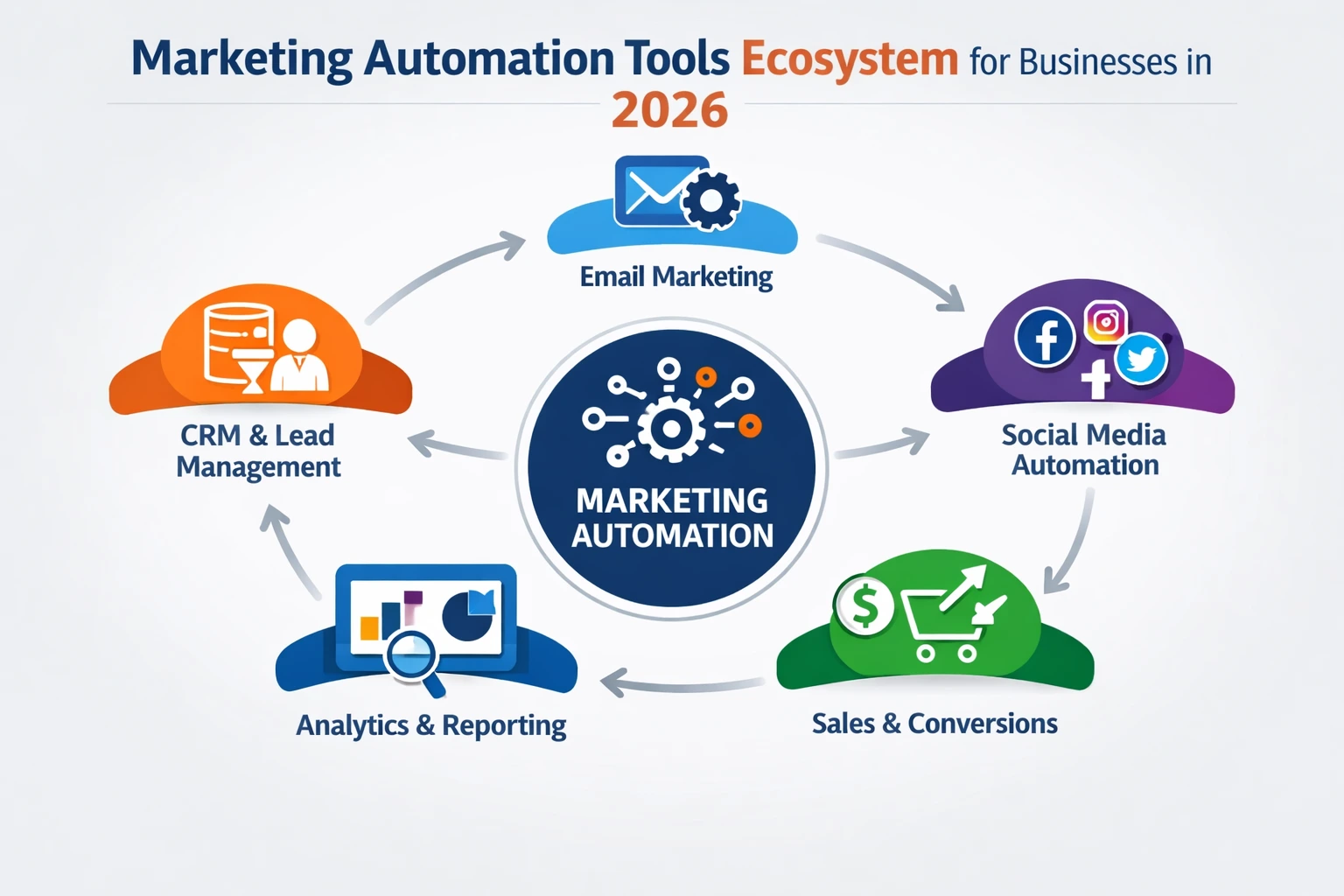
2. Email Marketing Automation Tools
Email marketing remains one of the highest ROI channels in 2026—but only when automated and personalized.
What Email Automation Does
- Sends behavior-based emails
- Triggers campaigns based on actions
- Segments users automatically
- Optimizes send time using AI
Instead of blasting newsletters, businesses now deliver hyper-personalized email journeys.
Use Cases
- Welcome email series
- Abandoned cart emails
- Re-engagement campaigns
- Lead nurturing sequences
Examples: Mailchimp, ActiveCampaign, Klaviyo, Brevo (Sendinblue)
3. Social Media Automation & Scheduling Tools
Managing multiple social media platforms manually is inefficient in 2026. Automation tools help brands stay consistent without burnout.
Benefits of Social Media Automation
- Schedule posts in advance
- Auto-publish across platforms
- AI-generated captions and hashtags
- Performance analytics and insights
These tools also help identify the best posting times and content formats.
Examples: Hootsuite, Buffer, Sprout Social, SocialPilot
4. Marketing Automation Platforms (All-in-One)
All-in-one marketing automation platforms combine multiple tools under one ecosystem.
What They Automate
- Lead capture forms
- Email and SMS campaigns
- Landing pages
- CRM integration
- Analytics and reporting
These platforms are ideal for businesses that want centralized control over marketing operations.
Why They Are Essential in 2026
- Reduced tool dependency
- Unified customer data
- Better attribution tracking
- Seamless automation workflows
Examples: HubSpot Marketing Hub, Marketo, Zoho Marketing Automation
5. AI Chatbots & Conversational Automation
In 2026, customers expect instant responses, 24/7. AI chatbots make this possible without human intervention.
How Chatbots Help
- Capture leads instantly
- Answer FAQs automatically
- Book appointments
- Qualify prospects
Advanced chatbots integrate with CRMs and personalize responses using customer data.
Platforms to Consider
- WhatsApp Business API automation
- Website chatbots
- Instagram and Facebook Messenger bots
Examples: Tidio, Drift, Intercom, Freshchat
6. Performance Marketing & Ad Automation Tools
Running paid ads manually in 2026 is inefficient and costly. Ad automation tools use AI to optimize campaigns in real time.
What Ad Automation Covers
- Smart bidding strategies
- Budget allocation
- Audience targeting
- A/B testing creatives
These tools help maximize conversions while reducing wasted ad spend.
Examples: Google Ads Smart Campaigns, Meta Advantage+, AdEspresso
7. Analytics & Reporting Automation Tools
Data-driven decision-making is non-negotiable in 2026. Automated analytics tools turn complex data into actionable insights.
Why Analytics Automation Is Important
- Real-time performance tracking
- Automated reports
- Cross-channel attribution
- ROI measurement
Instead of manual spreadsheets, businesses rely on AI-driven dashboards.
Examples: Google Analytics 4, Looker Studio, Hotjar, Mixpanel
8. Workflow & Task Automation Tools
Marketing doesn’t work in isolation. Workflow automation tools ensure smooth collaboration between marketing, sales, and support teams.
What They Automate
- Task assignments
- Lead handovers
- Internal notifications
- Approval workflows
These tools reduce delays and human errors.
Examples: Zapier, Make (Integromat), Monday.com, ClickUp
How Mixmedia Labs Helps Businesses Automate Marketing
Before investing, businesses should evaluate:
- Business size and goals
- Integration capabilities
- Scalability
- AI and automation depth
- Ease of use
Avoid tool overload. The best strategy is to build a connected automation ecosystem, not disconnected tools.
How to Choose the Right Marketing Automation Tools in 2026
At Mixmedia Labs, we help businesses:
- Identify the right automation tools
- Set up workflows and integrations
- Optimize campaigns using AI
- Track performance and ROI
Our automation-driven digital marketing approach ensures higher efficiency, better conversions, and long-term scalability.
Conclusion
Marketing automation in 2026 is not about replacing humans—it’s about empowering teams to focus on strategy, creativity, and growth.
By adopting the right marketing automation tools, businesses can:
- Save time
- Reduce costs
- Improve customer experience
- Stay competitive in a fast-changing digital world